



I have spent my career at the intersection of design and wellness — and if there is one thing nearly two decades of designing homes, yoga studios, health clinics, and workplaces has taught me, it is this: your environment is not a backdrop to your mental health. It is an active participant in it.
The spaces we inhabit every day are either quietly supporting our nervous systems or quietly depleting them. Most of us have never been taught to tell the difference — and fewer still have been taught that the solutions are largely free, or close to it.
This isn't a guide about expensive renovations or designer furniture. It's a collection of strategies I return to again and again — for my clients, for my own home, and for anyone who wants to use the space they already have as a tool for mental and emotional wellbeing. Think of it as a prescription from a wellness designer who also happens to live in the real world.
1. Declutter Your Space to Give Your Mind Room to Rest
I want to start here because it is both the most accessible strategy and the most underestimated one.
Clutter is not a neutral condition. In psychology, visual clutter has been consistently linked to elevated cortisol levels — the body's primary stress hormone — particularly in women. In Vastu Shastra, the ancient Indian architectural science that has informed many of my design principles over the years, clutter is understood as stagnant energy: it blocks the natural flow of prana (life force) through a space, creating a heaviness that settles into mood, focus, and sleep.
What your nervous system craves — and rarely gets enough of — is white space: areas where the eye can rest, where the mind isn't bombarded by visual information. A cleared surface. A corner with nothing in it. A shelf with breathing room between objects.
Start small. One drawer. One countertop. One corner. Donate what no longer serves you, repair what deserves to stay, and release the rest without guilt. The lightness you feel afterward isn't imaginary. It is your nervous system exhaling.

2. Move Air Through Your Home Every Single Day
This one costs nothing and takes sixty seconds — and I am convinced it is one of the most underused mental health tools available to us.
The EPA estimates that the average home's indoor air is up to five times more polluted than the outdoor air around it. Off-gassing from synthetic furnishings, residual cleaning chemicals, cooking byproducts, and poor ventilation create an invisible indoor pollution that, over time, affects cognitive function, mood, and sleep quality.
Open a window. Open a door. Create a cross-draft for even five to ten minutes each morning. Let the air move. This simple daily act flushes stale air, introduces negative ions naturally (which have been associated with improved mood and alertness), and creates a sensory reset that signals to the body: something fresh is available.
In the warmer months, this is effortless. In colder ones, it requires a small act of discipline. It is worth it every time.

3. Schedule Digital-Free Time and Protect It Like an Appointment
In our household, I treat screen-free time the same way I treat medical appointments — it goes on the calendar, it has a set time, and it does not get bumped.
The evidence on what constant digital connectivity does to mental health is no longer ambiguous. Chronic smartphone use is associated with elevated anxiety, disrupted sleep, shortened attention spans, and a neurological state of low-grade vigilance that is exhausting to maintain. We are not designed to be reachable, responsive, and stimulated every waking hour.
Scheduling digital-free time — even one hour a day, or a dedicated half-day each week — is not a luxury. It is a form of cognitive hygiene. During that window: no scrolling, no checking, no background noise from screens. Instead: a walk, a meal eaten without a device, a book, time in the garden, a conversation that isn't competed with a notification.
If you find this difficult, that is data. The harder it feels to put the phone down, the more your nervous system needs you to.

4. Create a Dedicated Wellness Space at Home
As a wellness designer, this is the recommendation I am most passionate about — and also the most personal.
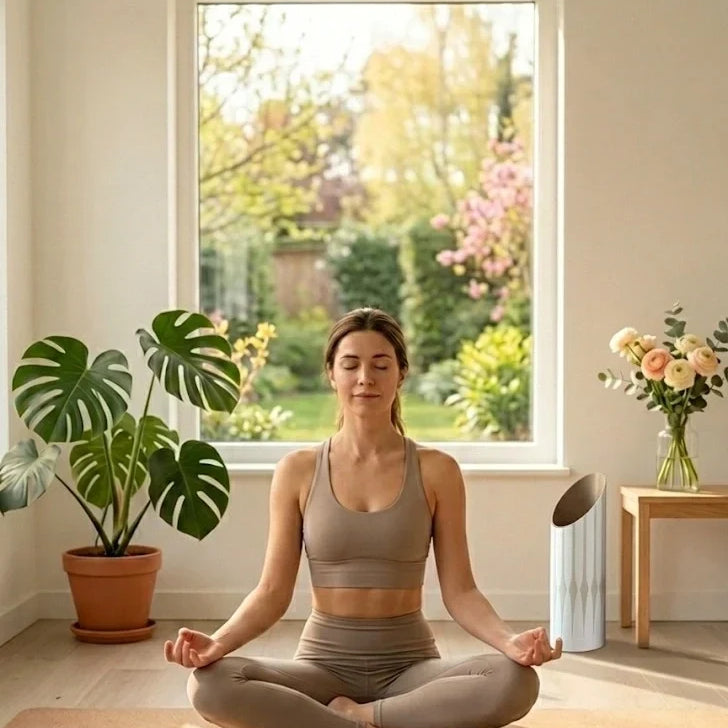
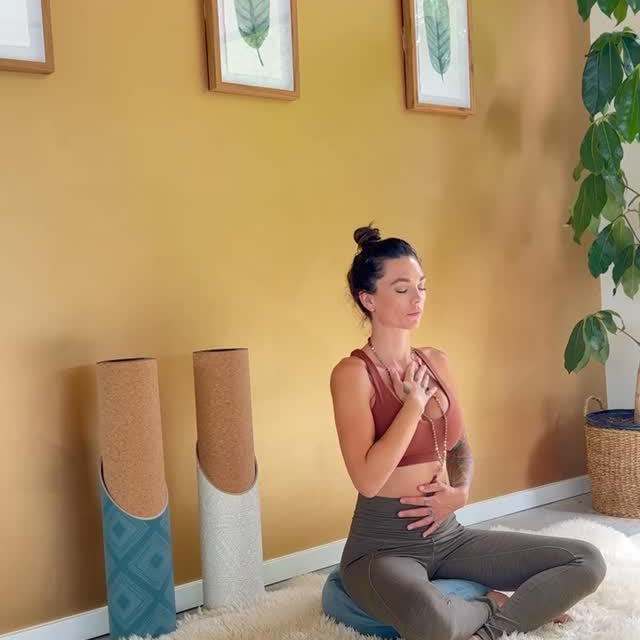
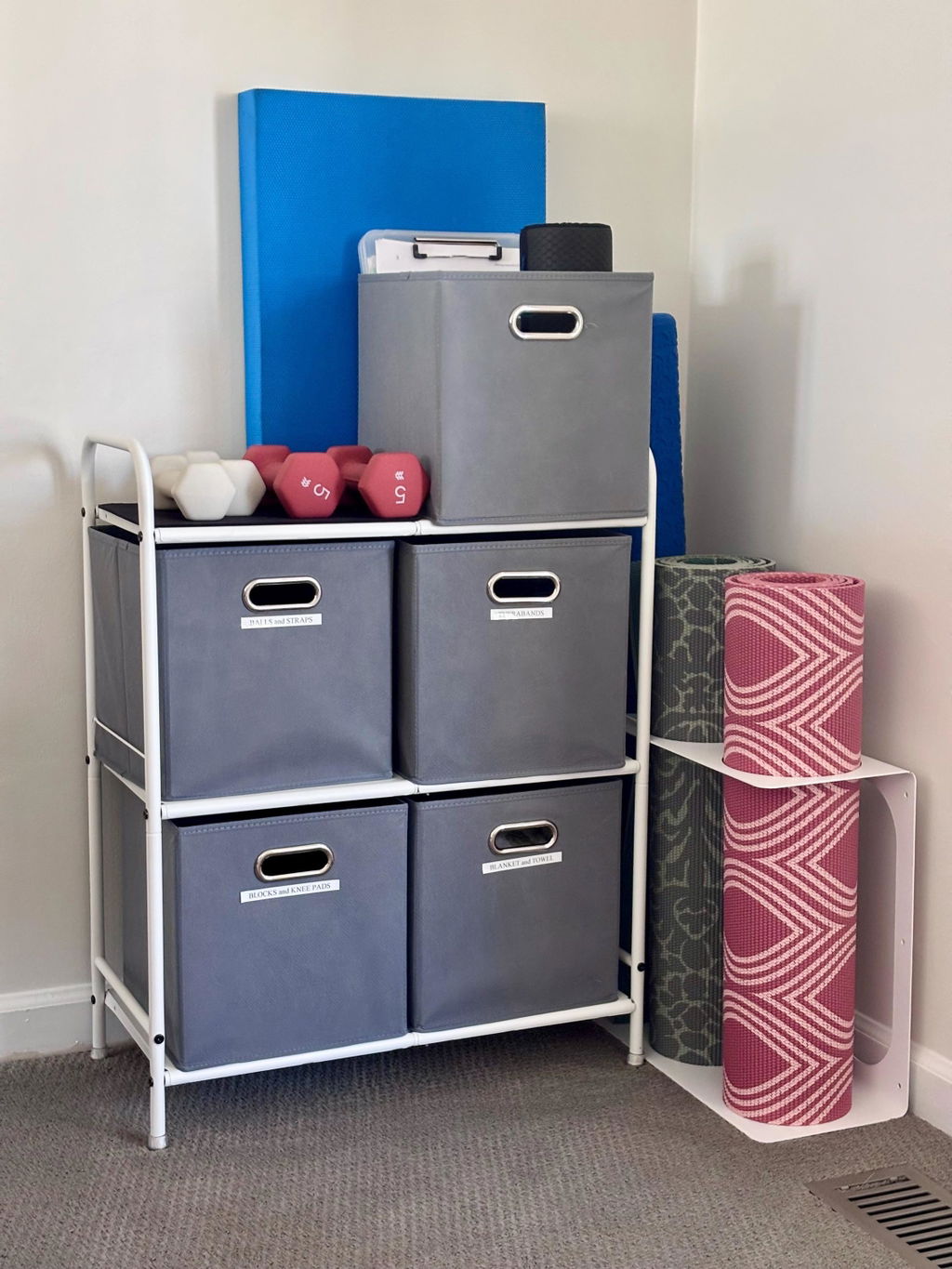
I have designed yoga studios, health clinics, and spa environments for clients, and the thread running through all of them is the same: dedicated space creates dedicated practice. When a corner of your home is intentionally designed to support your nervous system — visually calm, physically organized, free of the chaos of daily life — you will use it. When your mat is stuffed in a closet and your blocks are scattered under the couch, you won't.
The principles I apply in professional wellness design are equally available at the residential scale:
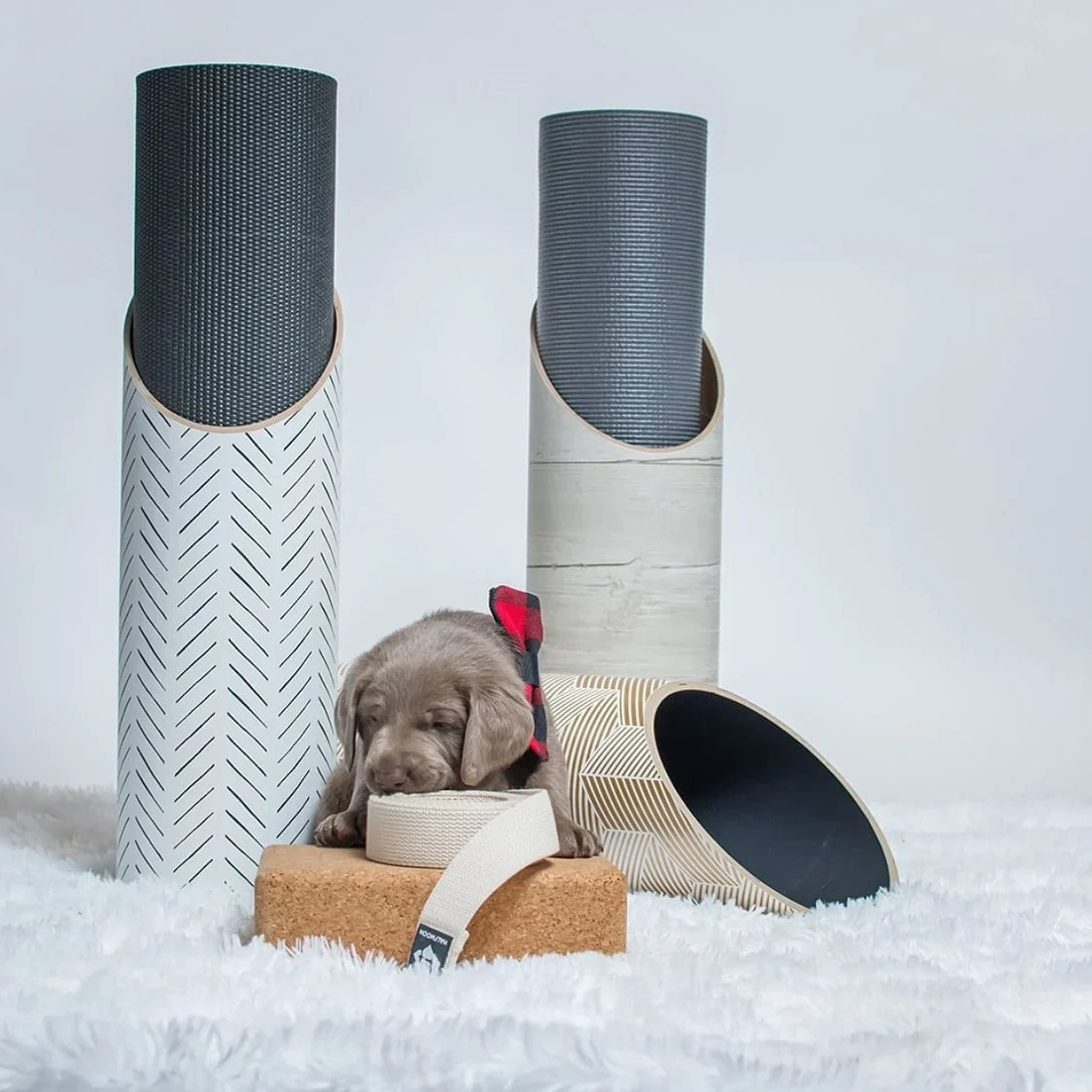
- Natural, non-toxic materials. What your home is made of matters more than most people realize. Synthetic furnishings, conventional candles, and low-quality storage products off-gas volatile organic compounds (VOCs) and hormone-disrupting chemicals into the air you breathe every day. Over time, this chemical load has measurable effects on mood, cognition, hormonal balance, and physical health. Choosing natural materials — wood, plant-fiber, linen, beeswax — wherever possible is one of the most impactful investments you can make in your home's health. This is a core principle behind every Mache product: eco-conscious yoga and fitness storage crafted from recycled and natural materials, specifically designed not to introduce toxins into the wellness spaces they inhabit.
- Calm visual palette. Neutral, nature-inspired tones — warm whites, soft greens, earthy taupes — are not just aesthetically pleasing. They reduce cortisol. Bold, saturated colors stimulate the nervous system; soft, grounded ones calm it. If you're on a budget, a can of the right paint color is one of the most affordable wellness interventions available.
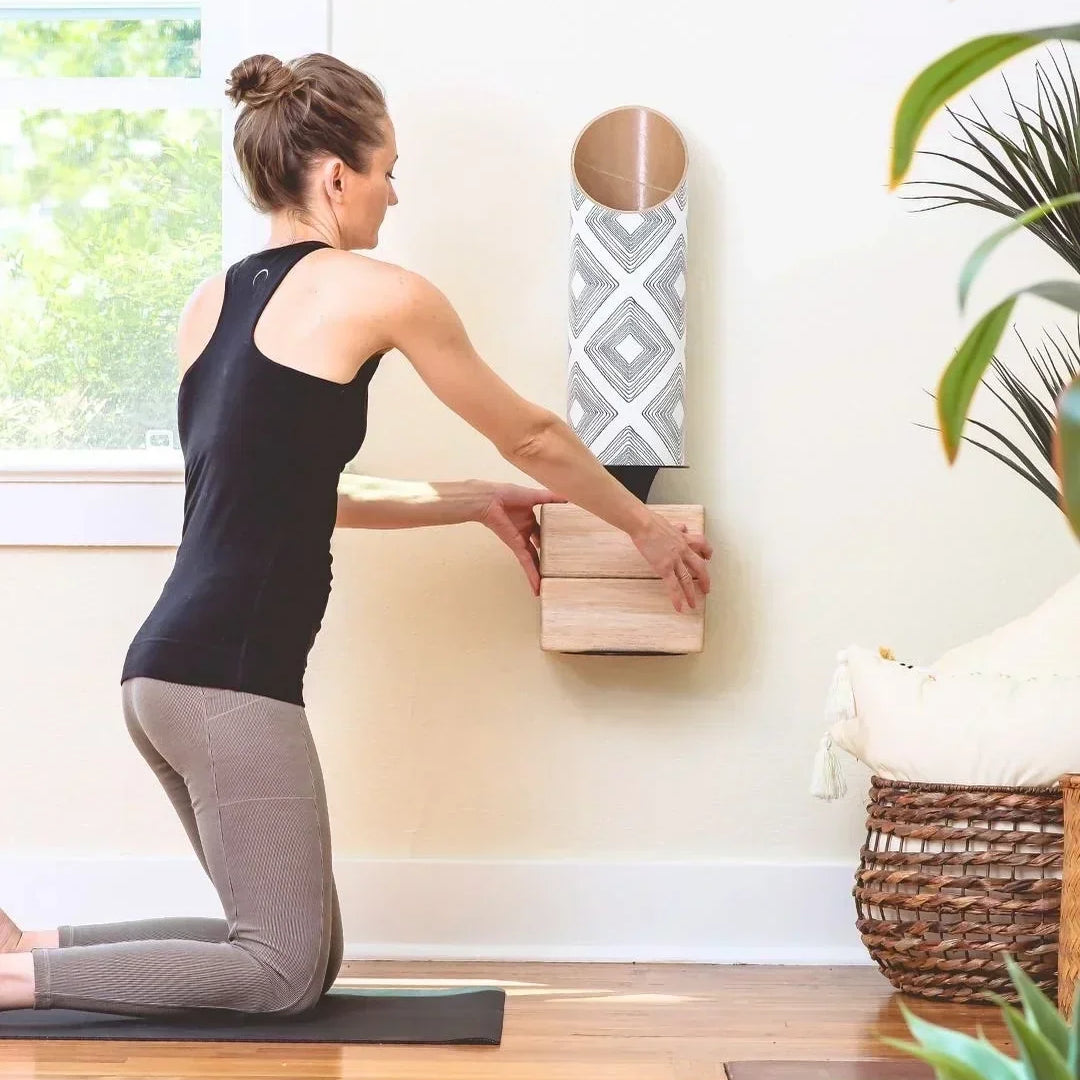
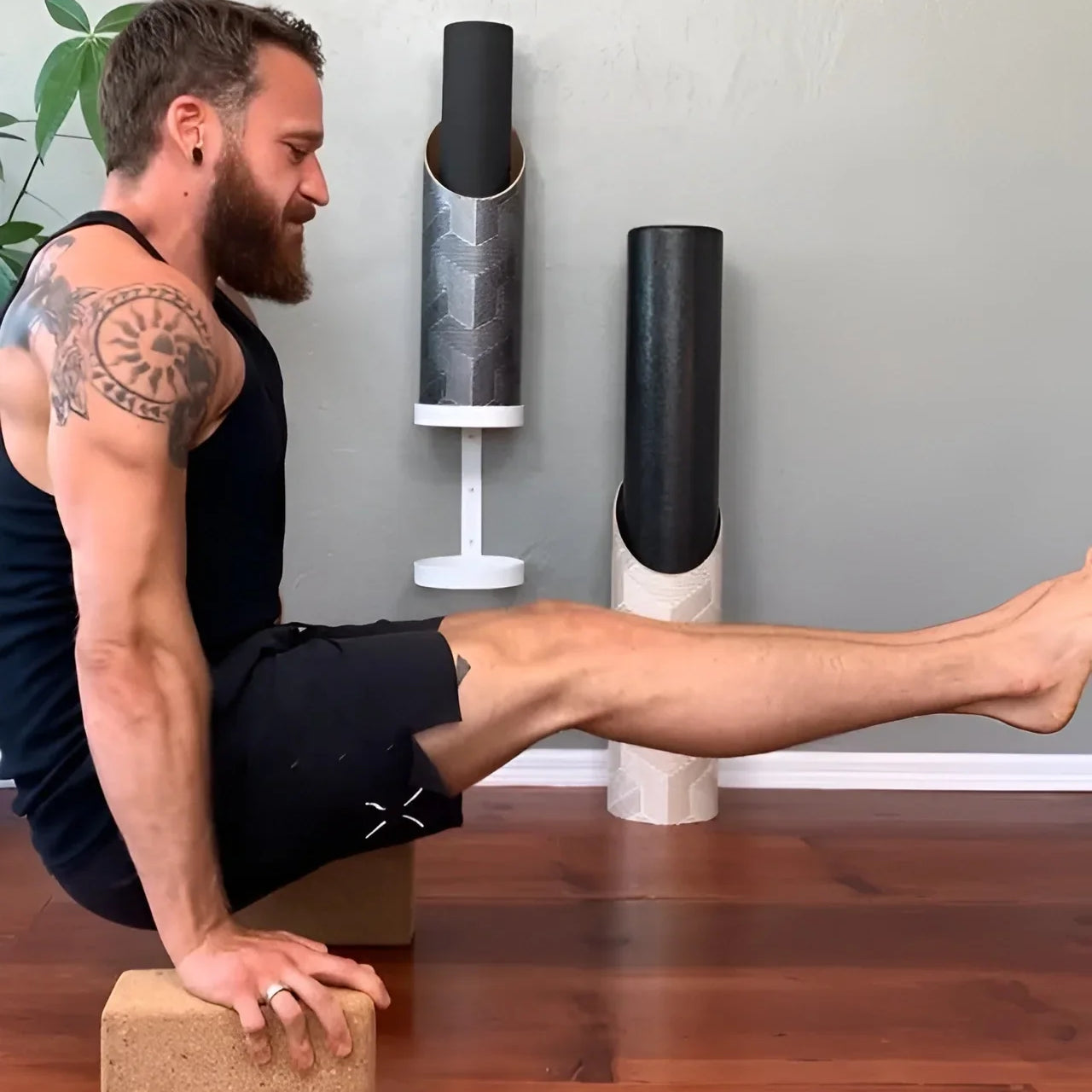
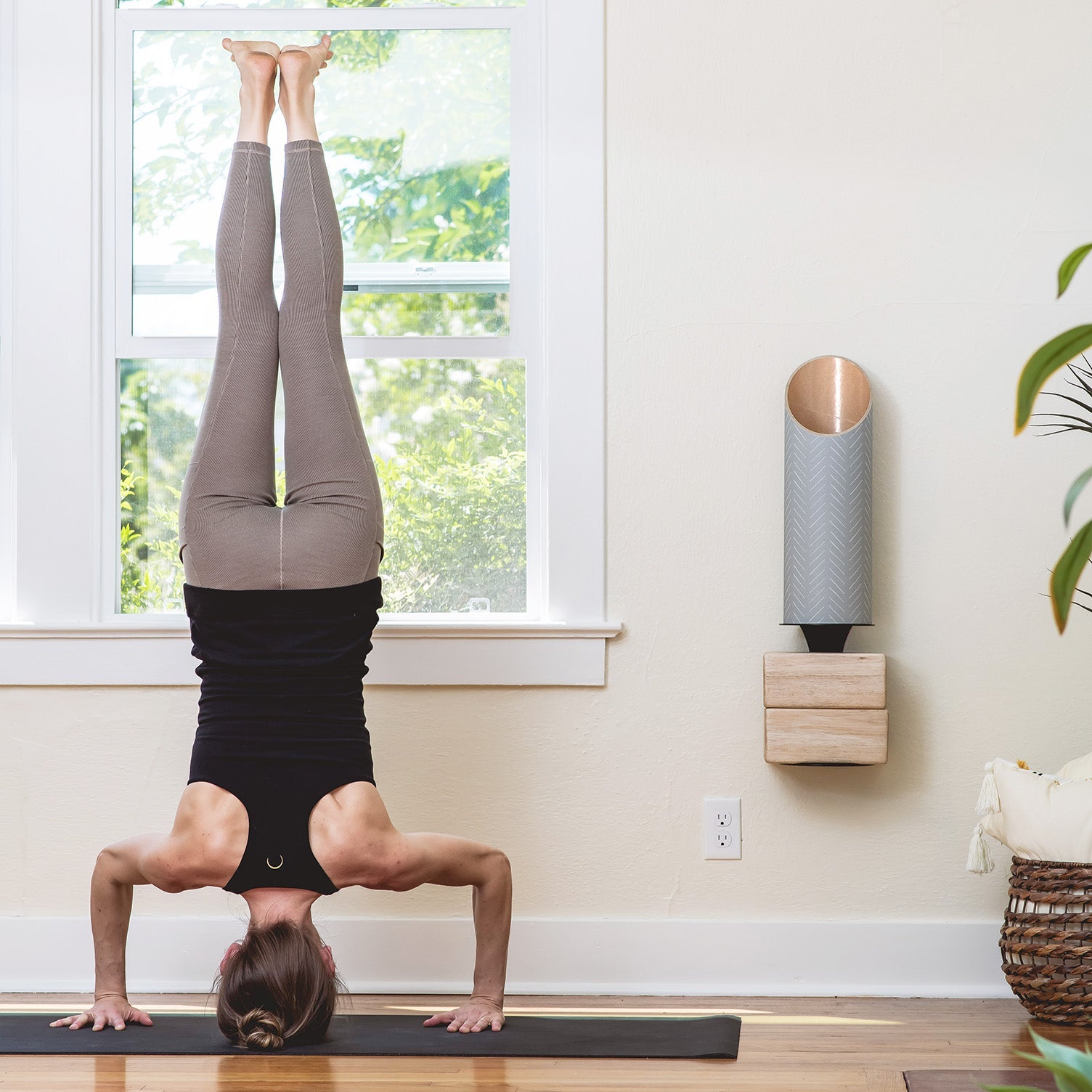
- Organized, accessible gear. When your yoga mat, foam roller, and props live in a beautiful, dedicated storage solution that's visible and within reach, your practice becomes frictionless. Mache's wall-mounted racks and mat tubes are designed for exactly this: to keep your wellness tools out of harm's way, protected from pets and children, and ready to use the moment you are.
If you want professional guidance on designing a wellness-centered space in your home — whether that's a single corner or a whole-room transformation — I am available for design strategy consultations. Reach me at brienne@heymache.com.

5. Sync Your Home's Lighting to the Sun to Repair Your Circadian Rhythm
This is the design intervention I wish more people knew about, because the science behind it is both fascinating and deeply actionable.
Your body runs on a 24-hour biological clock — your circadian rhythm — that regulates sleep, hormone production, mood, metabolism, immune function, and mental health. The primary environmental input for that clock is light. Specifically, the intensity and color temperature of the light you're exposed to throughout the day.
Well-synchronized circadian rhythms are fundamental for human health and particularly mental health, but patterns of modern living — including excess light at night — can cause desynchronization of rhythms and result in a wide range of adverse mental health outcomes.
Many mood disorders are either characterized by sleep and circadian rhythm disruption or precipitated by an irregular light-dark cycle. Sleep disruption is a diagnostic criterion for major depression, bipolar disorder, PTSD, generalized anxiety, and other mood disorders.
The practical translation for your home is straightforward:
- During the day: Maximize bright, natural light. Open blinds fully. Sit near windows. Step outside. Bright, cool-toned light during daytime hours signals wakefulness, supports alertness and mood, and anchors the first half of your circadian cycle.
- In the evening: Dim everything down. Swap overhead lights for lamps. Use warm, amber-toned bulbs after sunset. There is strong scientific consensus that blue-enriched light in the evening disrupts nocturnal sleep, phase-delays the circadian system, and suppresses melatonin production — which means the cool-white LED overhead light you're sitting under at 9pm is actively working against your sleep and your mental health.
The lowest-cost version of this: replace a few bulbs with warm-toned options and commit to turning the overheads off after dinner. The investment version: smart bulbs that automatically shift from cool to warm as the sun sets. Either way, syncing your home's lighting to the sun's natural rhythm is one of the most elegant, evidence-based wellness design choices you can make.

6. Share Your Home With Plants and Animals
I have never designed a wellness space — not a single one — without plants. They are, in my opinion, non-negotiable.
Recent trends reveal growing interest in "nature therapy" as people explore diverse mental health support strategies beyond traditional therapy. And the research supports what plant lovers have always known intuitively: living with greenery reduces stress, lowers blood pressure, improves air quality, and generates a measurable sense of calm. Plants are living organisms that respond to care — and caring for something living, as I've written before in our World Bee Day piece, is itself a form of mindfulness.
The same is true of animals. Pet owners report 34% fewer anxiety attacks per month, and for people facing depression, pet ownership is linked to 30% less depression and 25% lower depression scores in clinical trials. In a nationally representative survey, 85% of respondents agreed that interactions with pets help reduce loneliness, and 80% of pet-owning respondents said their pet makes them feel less lonely.
You don't need a dog or a dedicated garden. A few well-placed houseplants, a windowsill herb collection, a small aquarium, or even a bird feeder outside a window you sit near daily — any of these introduce living, breathing, growing presence into a home that might otherwise feel static. That aliveness is contagious in the best possible way.

7. Rearrange Your Space Seasonally to Refresh the Energy
This is a practice I return to every season in my own home, and one I recommend to every client whose space has started to feel stale or heavy.
Seasonal transitions offer opportunities to refresh and realign your home's energy. In Vastu Shastra, seasonal rearrangement takes on deeper meaning — removing accumulated clutter and refreshing decorative elements helps restore optimal energy flow. Life transitions may require adjusting your home's energy to support new circumstances.
Vastu Shastra — the ancient Indian science of architecture and spatial alignment that I have applied professionally in projects including Banyan Botanicals' office expansion — teaches that the placement and orientation of furniture directly affects the flow of energy through a space. Vastu Shastra principles promote physical health, mental clarity, emotional stability, and spiritual growth by aligning living spaces with natural and cosmic energies. Rearranging furniture isn't merely decorative; it is a way of disrupting stagnant patterns, opening new sight lines, and signaling to your nervous system that renewal is possible.
You don't need a Vastu consultant to benefit from this practice. You need an afternoon, a willingness to move things, and a genuine curiosity about how your space could serve you better. Try shifting a key piece of furniture — a sofa, a bed, a reading chair — to face a different direction. Open a wall you've been treating as a dead end. Clear a corner you've been filling. Notice how it feels over the following days. Often, the shift in physical space unlocks something in the inner landscape too.
8. Host a Small Dinner Party in Your Wellness-Inspired Home
I saved this one for last because it's the most joyful — and because it brings everything else together.
Once you have decluttered your space, freshened the air, established a calm and intentional environment, and begun to feel genuinely at home in your home — invite people into it. Connection is, according to a mountain of research and the 2023 U.S. Surgeon General's advisory on loneliness, one of the most powerful determinants of mental health and longevity we have. And a small, intimate dinner party — good food, screens away, conversation unhurried — is one of the most human, nourishing forms of it.
You don't need to cook a five-course meal or have a perfect home. You need a clean table, a few candles (beeswax, ideally), the people you most want to spend time with, and the willingness to be present with them. This is what your home is for. Not as a backdrop for productivity or a storage unit for your possessions — but as a place that holds the people and the practices that restore you.

Your Home Is Your First Line of Wellness
Therapy, medication, and clinical support are irreplaceable for many people — please seek them out if you need them. But for those of us navigating the everyday weight of modern life, the home is where the work of mental health also happens. In the quality of the air we breathe, the light we live by, the objects we choose to surround ourselves with, and the people we gather around our tables.
You don't need to do all of this at once. Choose one. Start there. The cumulative effect of small, intentional changes to your living environment is profound — and it compounds over time.
If you'd like support designing a home environment that actively supports your wellbeing, I offer design strategy consultations — reach me at brienne@heymache.com.
And if you're ready to invest in wellness storage that is built from non-toxic, natural materials and designed to make your self-care practice frictionless and beautiful: explore the Mache collection at heymache.com →
Read next: [How to Claim Your Own Wellness Corner in a Family Home] | [Why Bees Are the Original Wellness Practitioners]
Brienne Derosier is a Design Professional and Sustainability Leader with a Bachelor of Architecture (Magna Cum Laude) and Master of Interior Architecture from the University of Oregon, and a Y-Combinator Accelerator graduate. She is the founder of 2Yoke Design, a boutique wellness and architectural interiors firm, and Mache, an eco-conscious yoga and fitness storage brand. Her design philosophy — Where Wellness Meets Design — has informed over two decades of work across luxury residential, commercial, multi-family, and workplace projects.