



Today is World Bee Day — and I've been looking forward to writing this one for a while.
I'll be honest: bees occupy a particular place in my heart and in the Mache world. Our Apis Yoga Mat Tube takes its name directly from Apis mellifera — the Western honeybee — and carries the golden image of that little creature across its surface as a reminder of something the ancient world understood deeply and that we are, I think, beginning to remember: the bee is not just a pollinator. It is a symbol, a healer, a builder, and one of the most intelligent collaborative systems on the planet.
World Bee Day falls on May 20th each year — chosen to honor the birthday of Anton Janša, a pioneer of modern apiculture born in Slovenia in 1734, a country where beekeeping is an important agricultural activity with a long-standing tradition. This year's theme is "Bee Together for People and the Planet" — a nod to the millennia-long partnership between humans and bees, one of the most enduring and consequential collaborations in the story of our species.
In that spirit, I want to share what I know — and what the science says — about why bees matter for our planetary health, and more personally, for yours.

Bees Have Been Revered Across Every Great Civilization
Long before wellness became an industry, humanity understood that the bee was sacred. This isn't mythology for its own sake — it's the accumulated wisdom of cultures that observed nature with extraordinary care.
Ancient Egypt. Cave paintings in Spain show honey harvesting dating back roughly 8,000 years, and the ancient Egyptians kept managed hives, used honey in medicine and religious ritual, and even transported hive boxes along the Nile to follow seasonal blooms. Bees were so integral to Egyptian civilization that the pharaoh held the title "Beekeeper" — and honey was placed in tombs alongside royalty, offered to gods, and used to preserve the dead.
Ancient Greece and the Oracle of Delphi. In Greek mythology, the nymph Melissa — whose name translates to "honeybee" — was said to have discovered honey and shared its benefits with humanity, later becoming a priestess of the goddess Artemis. The Oracle of Delphi itself was guarded by priestesses called "Delphic Bees," believed to channel divine messages. Bees were understood as messengers between the mortal and divine worlds — carriers of prophecy, wisdom, and the sacred feminine.
Hindu Tradition and the Vedic Texts. In Hindu mythology, the gods Vishnu, Krishna, and Indra were all called Madhava — the nectar-born ones — and the bee was their symbol. Vishnu is represented as a blue bee upon a lotus flower, the symbol of life, resurrection, and nature. Krishna, an incarnation of Vishnu, is often depicted with a blue bee on his forehead. The Rigveda, one of the oldest known texts, mentions bees as metaphors for the soul and enlightenment — the imagery of bees collecting nectar seen as an allegory for seekers of spiritual truth gathering wisdom.
Bugonia — The Myth of Life from Death. One of the most fascinating and strange bee traditions of the ancient world was bugonia — the belief that bees could be spontaneously born from the decaying carcass of a sacrificed bull. Greek for "oxen-born," bugonia describes a phenomenon believed across continents and centuries. The most famous account appears in Georgics by the Roman poet Virgil: the shepherd Aristaeus loses his bees to disease and hunger, and is instructed by his mother to sacrifice a bull and seal its carcass in a dark enclosure — days later, a swarm emerges from the rotting body, renewing his hives. It reads as myth today, but in its time it encoded a profound truth: life arises from death, renewal from decay. The bee stood at that threshold.
Napoleon Bonaparte. Napoleon chose the bee as a symbol of immortality and industry, adorning his coronation robe and regalia with hundreds of golden bees to signify his alignment with ancient dynasties. His use of the bee intentionally connected his regime to the early Merovingian kings, whose tombs held bee-shaped artifacts. For Napoleon, the bee was not decorative — it was a declaration of lineage, power, and the conviction that great civilizations are built, like hives, through disciplined collective work.
Five civilizations. Thousands of years. One tiny creature at the center of every one of them.

Without Bees, Our Food System Collapses
I want to make this concrete before we get to the wellness applications, because the scale of it matters.
Nearly 90% of the world's wild flowering plant species and more than 75% of the world's food crops depend on pollinators — and bees are the primary among them. We're talking about almonds, avocados, blueberries, cherries, cucumbers, squash, coffee, chocolate, apples, and hundreds of other foods that form the foundation of a healthy diet. Remove the bee, and the produce aisle — and the nutritional diversity that supports human health — is devastated.
Bee populations are under serious pressure from pesticide exposure, habitat loss, parasites, and climate disruption. Since bees pollinate around 80% of flowering plant species, the consequences of their decline extend far beyond agriculture into the stability of entire ecosystems.
Protecting bees is not an environmental gesture. It is an act of self-preservation.

Honey Is Not a Sweetener — It Is a Medicine
I need to be careful here, because I speak from personal experience as much as from science.
For years, I suffered from seasonal allergies — the full miserable repertoire of itchy eyes, congestion, sneezing, and the exhausted fog that follows. I started incorporating raw, local honey into my daily routine — consistently, over a long stretch of time — and something remarkable happened: my seasonal allergies, gradually and then completely, resolved. I'm not the only person with this story, and while the science behind it makes intuitive sense (local honey contains trace amounts of the local pollens your immune system is reacting to, essentially acting as a form of gentle, ongoing desensitization therapy), I share it not as medical advice but as lived experience worth noting.
What Ayurveda — one of the world's oldest health systems — says about honey, though, goes far deeper than allergy management.
According to Ayurveda, honey is not just food — it is medicine. When used properly, it strengthens immunity, improves digestion, and supports healing. But when misused, it can actually become toxic, leading to digestive issues and long-term imbalances.
The rules Ayurveda gives us for honey are specific and worth knowing:
- Never heat honey. This is the most critical rule. When honey is exposed to high temperatures, it produces harmful compounds — Ayurveda describes heated honey as difficult for the body to process and capable of creating toxicity over time. If you can't comfortably sip your drink, it's too hot for honey.
- Take honey in small doses — typically ½ to 1 teaspoon — in the proper context. A teaspoon of honey in warm (not hot) water with a few drops of apple cider vinegar or lime juice first thing in the morning on an empty stomach is a classic Ayurvedic remedy to enhance digestion, detoxify the system, and support healthy weight.
- Consume in moderation — Ayurveda recommends no more than 4–6 teaspoons of honey per day. And avoid honey during summer, when the body already runs hot, as it can aggravate internal heat.
- Pair honey with herbs to enhance their potency — Ayurveda considers honey a yogavahi, a carrier substance that drives the healing properties of added herbs deeper into the body's tissues.
The modern suggestion to add honey to your hot tea? Ayurveda has been cautioning against that for thousands of years. Reach for raw honey stirred into something that has cooled, and you'll be treating it as the medicine it actually is.

Propolis: Nature's Medicine Cabinet in a Jar
If honey is the bee's gift to our kitchens, propolis is its gift to our medicine cabinet — and I genuinely believe it belongs in everyone's home health toolkit.
Propolis is the resinous substance bees collect from tree buds and plant exudates, mix with their own enzymes and beeswax, and use to seal, sterilize, and protect the hive. A beehive, when tested, is one of the most sterile environments in nature — and propolis is why. To date, over 1,000 compounds have been identified in propolis, with biological properties including antioxidant, antibacterial, fungicidal, antidiabetic, anticancer, anti-inflammatory, and immunomodulatory activities.
What does that mean practically?
In a clinical trial of 122 healthy adults, a standardized propolis oral spray reduced the risk of upper respiratory infection by 31% when taken daily. Among those who were already symptomatic, 83% of people using the propolis spray had complete relief from throat symptoms after just three days — compared to only 28% of those in the placebo group.
More recent research has examined propolis's potential in preclinical models of cancer and infectious diseases, finding that its active constituents can induce apoptosis in cancer cells, inhibit tumor proliferation and metastasis, and modulate immune responses. This research is ongoing and promising — propolis is not a cure, but it is a remarkably bioactive substance that modern science is only beginning to fully understand.
I keep a propolis tincture in my wellness kit year-round. At the first sign of a scratchy throat, I reach for it. It works.

Beeswax Candles: Why They Belong in Your Home Wellness Space
Let me be honest with you here, because the internet is full of overclaims about beeswax candles and I want to give you the accurate picture.
The popular claim is that beeswax candles release negative ions that actively purify indoor air. The honest answer from the science: no peer-reviewed study has confirmed that beeswax candles purify air through negative ion release. They may burn cleaner than paraffin, but they still emit some pollutants. I won't pretend otherwise.
What is true, and what matters enormously: unlike paraffin candles, which can release toxic chemicals like toluene and benzene into the air, beeswax candles burn cleanly and do not contribute to indoor air pollution. That distinction is not trivial. Paraffin is a petroleum by-product, and conventional candles — including most of the beautiful, fragrant ones lining store shelves — are quietly off-gassing petrochemicals into the air you and your family breathe every day.
The average home's indoor air is, according to the EPA, up to five times more polluted than outdoor air. With that baseline already working against us, the last thing our wellness spaces need is another chemical source. A beeswax candle eliminates that source entirely — it burns cleanly, naturally, and with a warm, honeyed scent that requires no synthetic fragrance to be beautiful.
Burn beeswax in your wellness corner. Do it for the atmosphere, the ritual, the scent, and the clean burn. That's more than enough reason.

Apitherapy: Bees on the Frontier of Modern Medicine
One more dimension of bee medicine that I find genuinely fascinating — and that's gaining real traction in integrative medicine — is apitherapy: the therapeutic use of bee products, including bee venom, for healing.
In the mid-2020s, physicians began recommending honeybee venom to treat patients suffering from chronic or autoimmune diseases, with clinical trials indicating it may support the body's natural defenses as a form of biotherapy. Bee venom therapy has been used for over 5,000 years for the treatment of diseases and injuries — practiced by ancient Egyptian, Chinese, and Greek therapists including Hippocrates — and is currently being studied for its potential in treating chronic pain, rheumatoid arthritis, multiple sclerosis, Parkinson's disease, and autoimmune conditions.
The anti-inflammatory compound melittin, found in bee venom, has been shown to be 100 times stronger than cortisone in suppression of certain cytokine production — a finding that has generated significant excitement in pharmaceutical research. This is not fringe science. It's cutting-edge medicine catching up with what ancient healers already knew.
I'm not suggesting anyone seek out bee stings as a treatment — this is territory that requires qualified practitioners and careful screening. But I find it remarkable, and quietly humbling, that the small creature we have largely taken for granted is now being studied as a potential treatment for some of the most challenging diseases of our era.

Let the Bee Inspire Your Wellness Space
All of this brings me back to where I always come back: the home. The wellness corner. The small, intentional space you have claimed — or are beginning to claim — as your own.
The bee, in every tradition that has ever revered it, is a symbol of purposeful work, of collective care, of sweetness earned through consistency. It does not practice wellness in grand gestures. It builds, daily, one cell at a time.
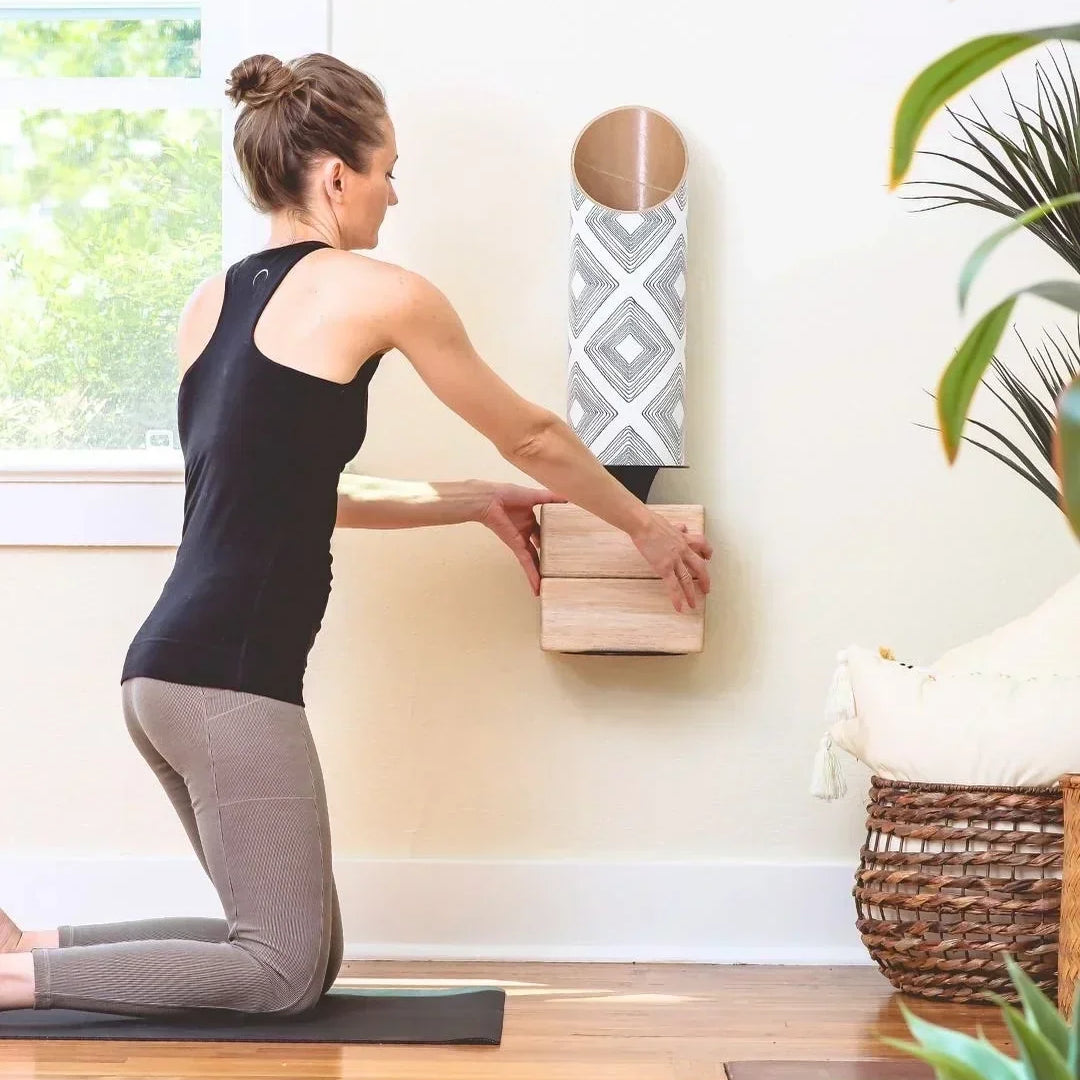
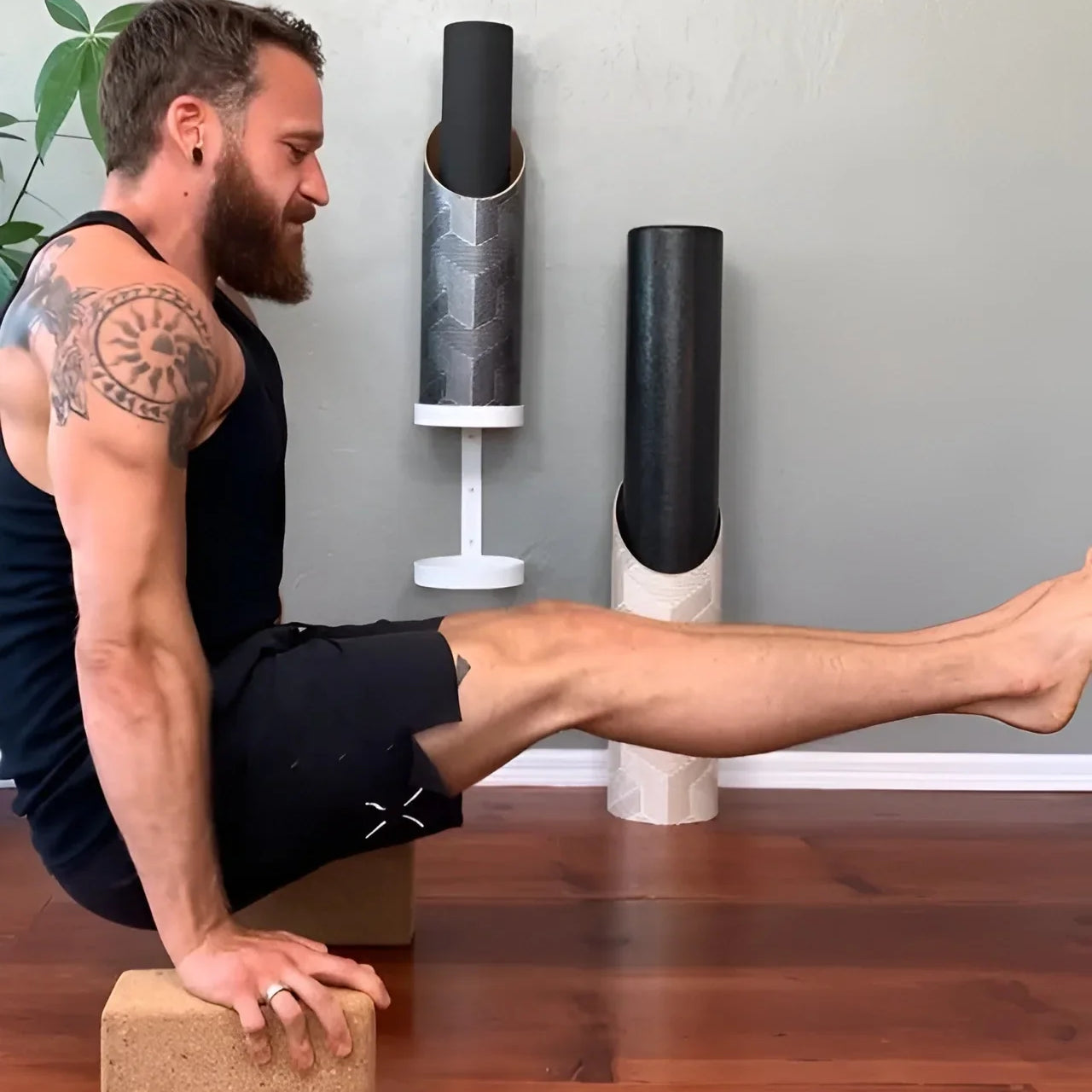
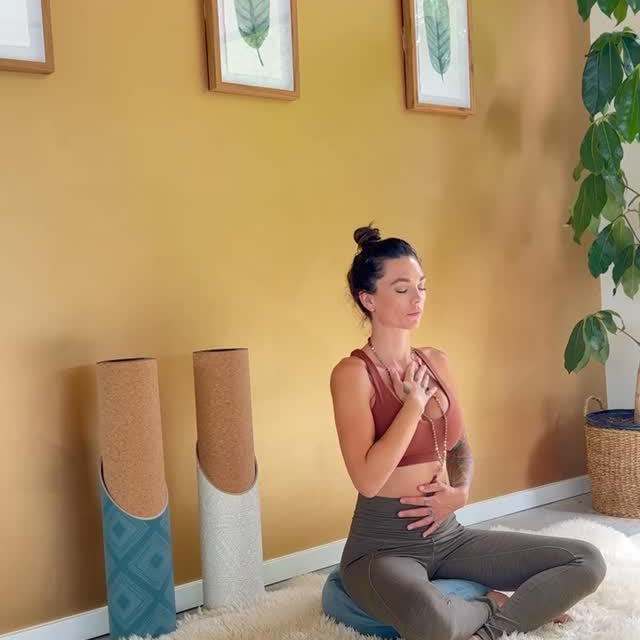
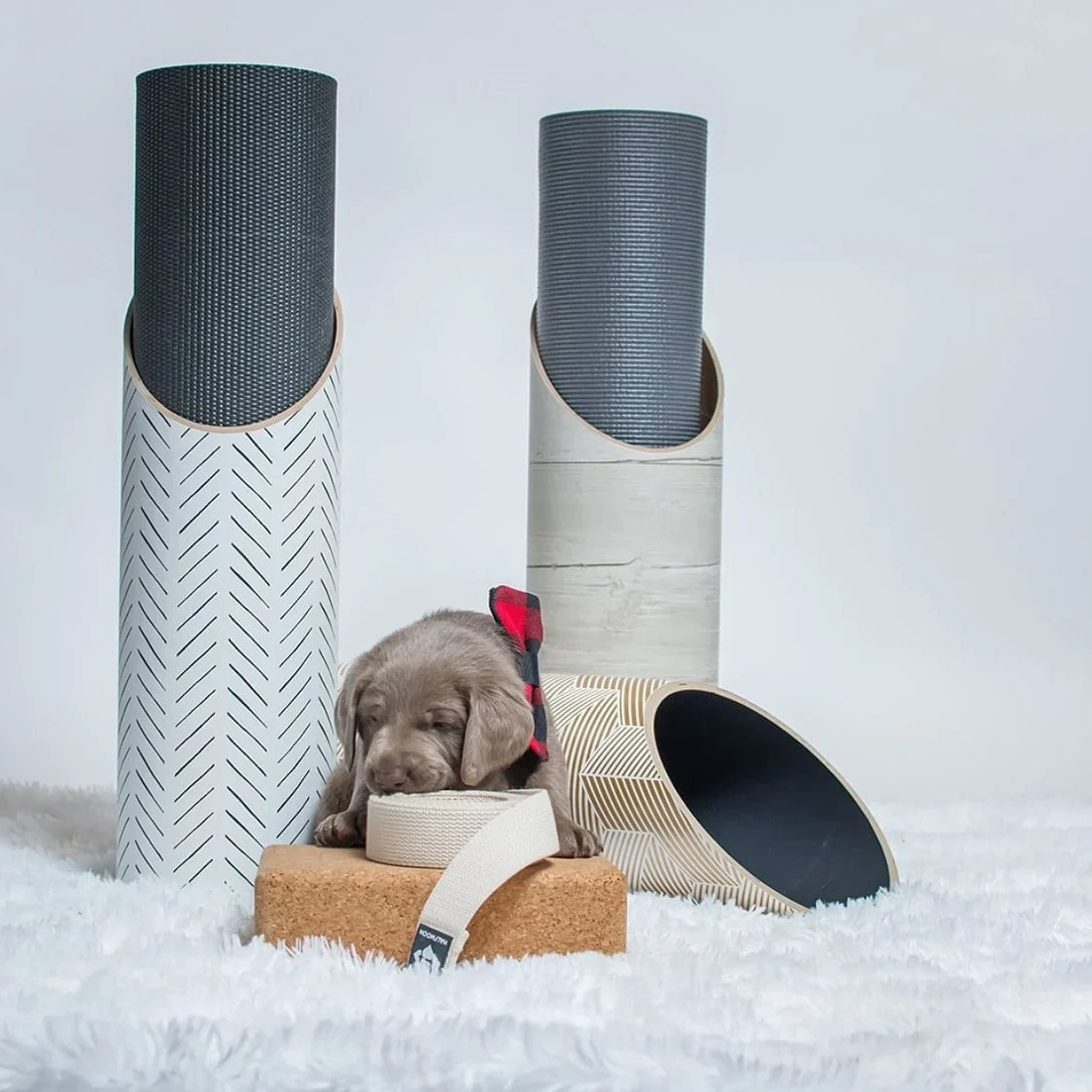
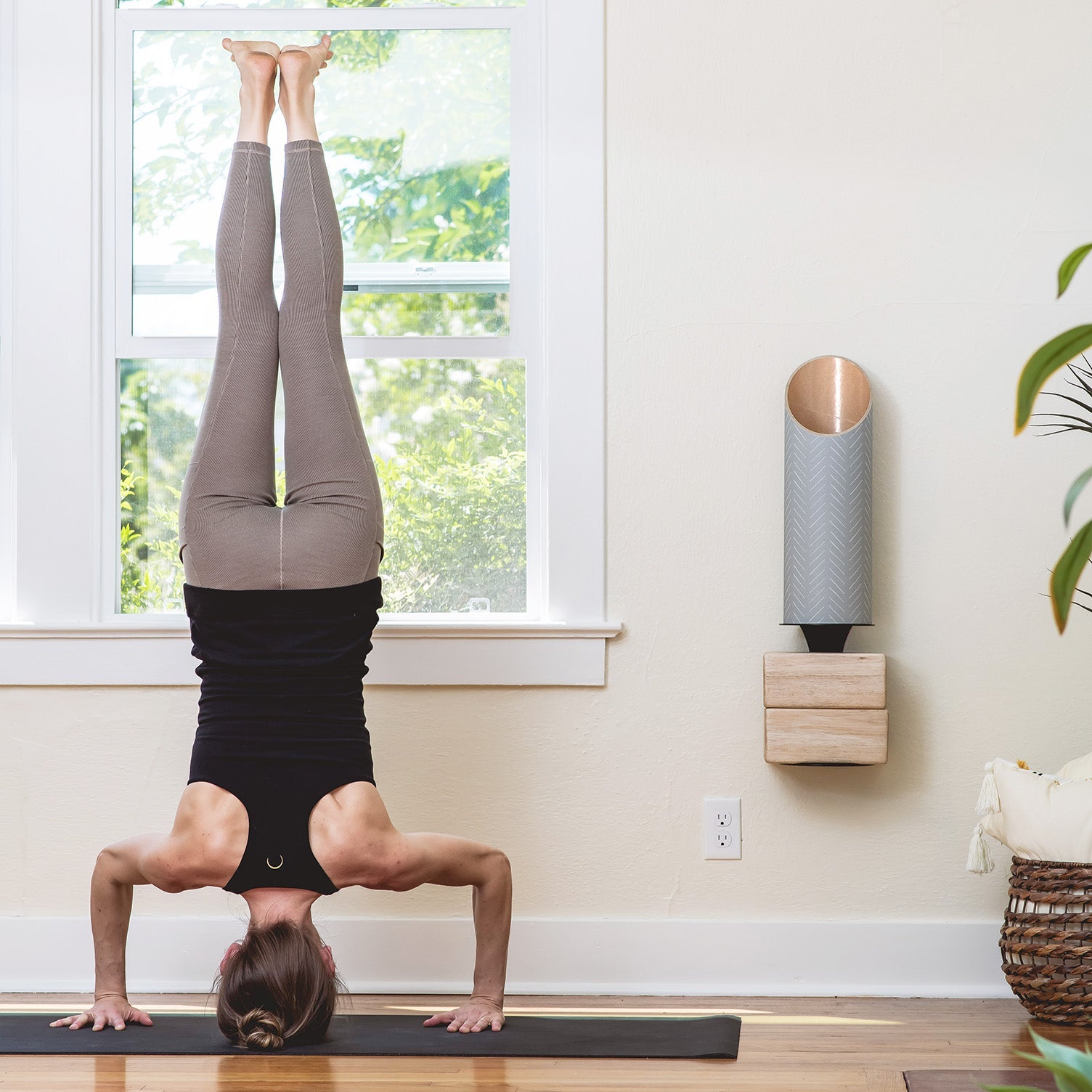
I designed the Apis Yoga Mat Storage Tube with exactly this in mind. The golden "Giver of All Life" dances across the surface of the Apis tube on a background of cream — the bee as a symbol of dedication to your practice, a reminder to stop and smell the flowers along the way. Made by hand in the USA from 100% recycled paper, wood fiber pulp, and NAUF wood panel, the Apis Tube stores your yoga mat and foam roller, keeping your home fitness essentials tidy and within reach, making it easy and fashionable to practice often.
This is the Mache philosophy in a single object: beautiful, intentional, eco-conscious, and purpose-built to make your wellness practice easier to show up for every single day.
On World Bee Day, I invite you to honor the bee in your own way — plant something that blooms, buy local honey from a beekeeper you can name, light a beeswax candle in your wellness corner, and let that small golden creature remind you that the most important things in life are built slowly, collaboratively, and with extraordinary care.
Happy World Bee Day. 🐝

Read next: How to Claim Your Own Wellness Corner in a Family Home
Brienne Derosier is the founder of Mache, an eco-conscious yoga and fitness storage brand, and 2Yoke Design, a wellness-focused interior and architecture studio. She holds a Bachelor of Architecture (Magna Cum Laude) and a Master of Interior Architecture from the University of Oregon, is a Y-Combinator Accelerator graduate, and holds a 200-hr RYT certification. With 18 years of experience spanning architectural interiors, furniture design, product design, and wellness-centered brand building — and a personal tagline of "Where Wellness Meets Design" — she has been integrating Ayurvedic and holistic principles into her practice and her spaces for nearly two decades.